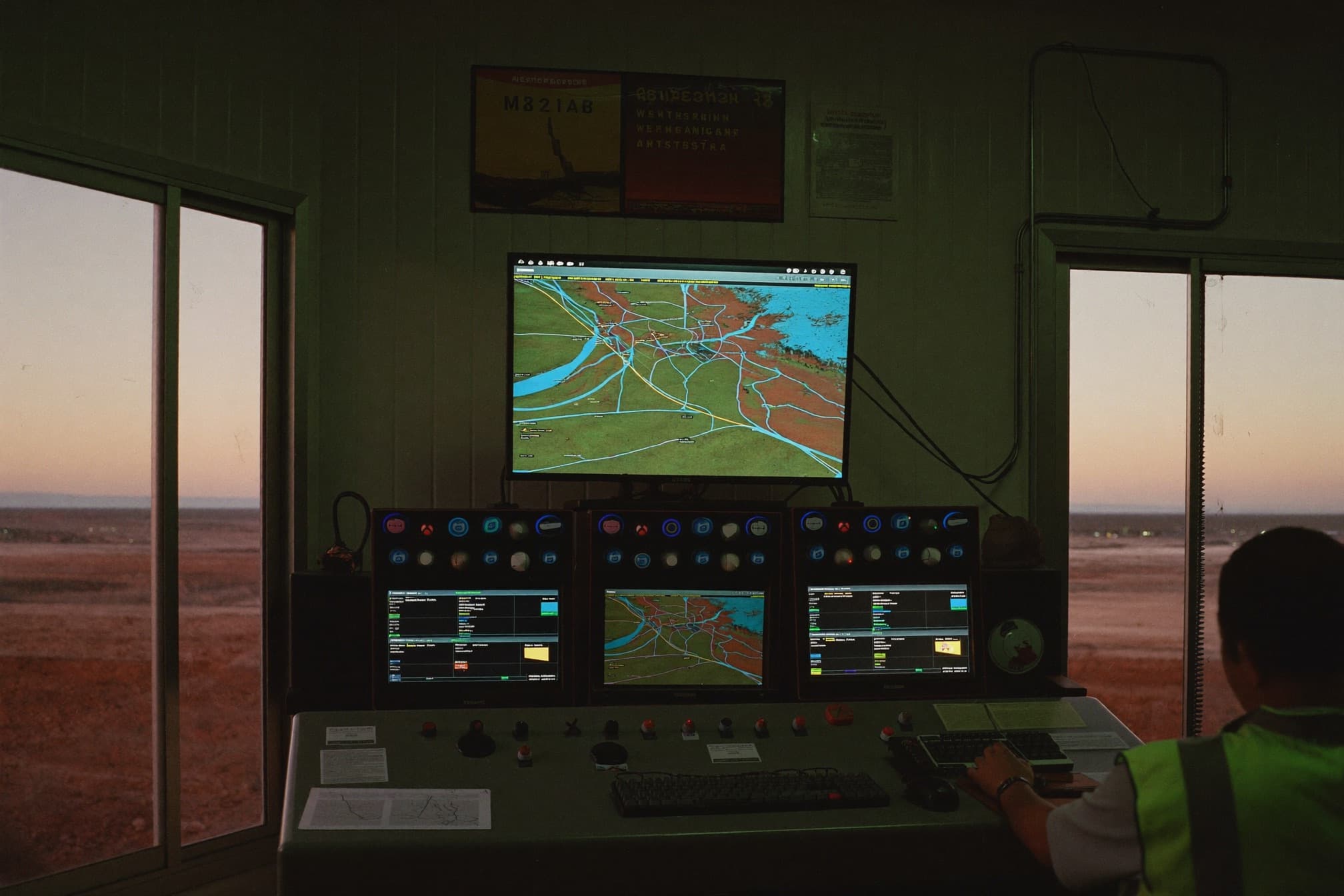
Brisbane is the operational headquarters for much of Queensland’s mining services sector. Companies based in the city deploy hundreds of workers to remote sites across the Bowen Basin, Galilee Basin, and North West Queensland. The work itself is complex and high-value. Drilling, blasting, haulage, maintenance, and rehabilitation. But the back-office burden that supports it. Timesheets, daily field reports, equipment pre-start checks, compliance documentation, and safety incident reporting. Consumes senior staff time that should be spent on operations, client relationships, and growth.
This article covers what Brisbane mining services companies are automating, which platforms they’re using, and the return on investment they’re seeing within weeks of deployment.
What Gets Automated First
Not everything needs to be automated at once. The highest-impact starting points are the processes that consume the most admin time, generate the most errors, and create the most compliance risk.
Daily Field Reports
On a typical mining services site, supervisors complete daily reports covering work completed, labour hours, equipment utilisation, weather conditions, safety observations, and any incidents or near-misses. In most companies, this is still done on paper forms or emailed Word documents that an administrator in Brisbane then transcribes into a spreadsheet or reporting system.
A Power Apps mobile form replaces this entirely. The supervisor opens the app on their phone or tablet, selects the project and shift, completes the structured form (with dropdown selections, photo capture, and GPS tagging), and submits. The data flows immediately to a centralised dashboard in Power BI. No paper, no transcription, no delay. The Brisbane office sees field activity in real time rather than two days later.
Timesheet Capture
Mining services timesheets are complex. Workers operate across different sites, shifts, and cost centres. Many are on enterprise agreements with shift allowances, travel allowances, and overtime calculations that vary by classification. Manual timesheets. Whether paper or spreadsheet-based. Are error-prone and create a bottleneck every fortnight when payroll needs to be processed.
Automated timesheet capture uses a mobile app that workers complete at the end of each shift. The app enforces business rules. Correct shift codes, valid cost centre allocations, maximum hours checks. At the point of entry rather than during payroll processing. Approved timesheets sync directly to the payroll system, eliminating the manual data entry step that typically consumes two to three full days of admin time per pay cycle for a 200-person operation.
Equipment Pre-Start Checks
Every piece of plant and equipment on a mining site requires a pre-start inspection before use. These checks are a regulatory requirement under the Queensland Mining and Quarrying Safety and Health Act. Paper-based pre-start forms are unreliable. They get lost, damaged, or completed retrospectively. When an inspector or auditor asks for the pre-start record for a specific machine on a specific date, the scramble to find it (or the discovery that it doesn’t exist) creates serious compliance risk.
Digital pre-start checks via a mobile app create an immutable audit trail. The operator selects the asset, completes the checklist (with mandatory photo evidence for specific items), and submits. If a defect is identified, the system automatically creates a maintenance request and, if the defect is critical, locks the asset out of service until the issue is resolved. Every record is timestamped, GPS-tagged, and stored with the operator’s digital signature.
Need help with field operations automation? Talk to our team.
We’ll review your current setup and give you honest recommendations : whether you work with us or not.
Book a free reviewCompliance Automation
Queensland mining operations face a dense regulatory environment. The Mining and Quarrying Safety and Health Act, the Environmental Protection Act, site-specific environmental authorities, and principal contractor requirements all generate compliance obligations that must be documented and reported.
Environmental Monitoring
Environmental monitoring data. Dust levels, water quality readings, noise measurements, rehabilitation progress. Must be collected at prescribed intervals and reported to the Department of Environment and Science. Automating the data collection (via IoT sensors where possible, or structured mobile forms where manual reading is required) and the reporting workflow ensures that readings are captured on time, stored correctly, and formatted for regulatory submission without manual compilation.
Safety Incident Reporting
When a safety incident occurs on a mining site, the clock starts immediately. High Potential Incidents must be reported to the Mines Inspectorate within 24 hours. Serious accidents trigger immediate notification requirements. An automated incident reporting workflow captures the details at the scene (via mobile app), triggers the required notifications based on severity classification, assigns investigation tasks, and tracks corrective actions through to closure. The entire chain. From initial report to investigation to close-out. Is documented in a single system with a complete audit trail.
Regulatory Submissions
Quarterly and annual regulatory submissions under the Queensland Mining Act require data from multiple sources. Safety statistics, environmental monitoring, workforce data, and production figures. When this data lives in separate systems (or worse, individual spreadsheets), compiling the submission is a multi-day exercise that pulls senior operations staff away from their core responsibilities. Automated data aggregation reduces the compilation time from days to hours and eliminates the transcription errors that lead to regulatory queries.
Equipment and Asset Tracking
Mining services companies operate fleets of heavy equipment worth tens of millions of dollars. Knowing where each asset is, how it’s being utilised, and when it needs maintenance is fundamental to operational efficiency and profitability.
GPS and IoT integration connects each asset to a central dashboard. Fleet managers in Brisbane can see the real-time location and status of every machine across every site. Utilisation data. Engine hours, idle time, fuel consumption. Flows automatically, replacing the manual utilisation reports that site supervisors currently compile weekly.
Predictive maintenance alerts use engine telemetry data to flag potential failures before they occur. When oil pressure, temperature, or vibration readings exceed thresholds, the system creates a maintenance work order automatically. Preventing a single unplanned equipment failure on a remote site can save $50,000–$200,000 in mobilisation costs, lost production, and emergency repairs.
Utilisation reporting gives commercial teams the data they need to optimise fleet size and deployment. If a $2M excavator is sitting idle 40% of the time, that’s visible immediately rather than buried in a monthly report that arrives three weeks after the period ended.
The ROI: Real Numbers
For a typical Brisbane mining services company with 200 to 500 field staff, the return on investment from field automation is measurable within weeks, not months.
- Timesheet processing: 20–30 hours per fortnight saved by eliminating manual data entry and payroll reconciliation.
- Daily field reports: 10–15 hours per week saved by eliminating paper transcription and follow-up.
- Pre-start checks: 5–10 hours per week saved, plus the elimination of compliance risk from missing or incomplete records.
- Incident reporting: Response time reduced from hours to minutes, with a complete audit trail that satisfies regulatory requirements.
In total, a 200–500 person mining services operation typically reclaims 40 to 80 hours per month of administrative time within eight weeks of deployment. At loaded labour rates for the senior admin and operations staff who currently perform these tasks, that translates to $8,000–$20,000 per month in recovered capacity. Capacity that goes back into running the business rather than processing paperwork.
Platforms That Work
Microsoft Power Platform is the foundation for most mining services automation projects. Power Apps provides the mobile forms and data capture interfaces. Power Automate handles the workflow orchestration. Routing approvals, triggering notifications, syncing data between systems. Power BI delivers the dashboards and reporting. The entire stack integrates natively with Microsoft 365, which most mining services companies already use.
The advantage of Power Platform is speed of deployment and flexibility. A daily field report app can be built, tested, and deployed in two to three weeks. A complete timesheet automation solution typically takes four to six weeks. These are not twelve-month IT projects. They’re tactical improvements that deliver value fast.
Custom development is warranted for complex integration scenarios. Connecting IoT sensor networks, integrating with legacy fleet management systems, or building interfaces with principal contractor portals that don’t have standard APIs. In these cases, a purpose-built integration layer ensures reliable data flow without the limitations of low-code connectors.
Where to Start
The most effective approach is to start with the single process that creates the most pain. For most mining services companies, that’s either timesheets or daily field reports. Automate that one process, demonstrate the ROI to the leadership team, and use the momentum (and the budget savings) to fund the next automation. Within six months, you’ll have a connected field operations platform that transforms how your Brisbane office supports remote site operations.
Ready to get started?
Book a free systems review. We’ll map the gap and send you a clear action plan.
Book my free systems reviewReady to automate your field operations?
AMBR IT has delivered 500+ business systems projects and specialises in Power Platform automation for mining services companies. We deploy fast and measure ROI from week one.