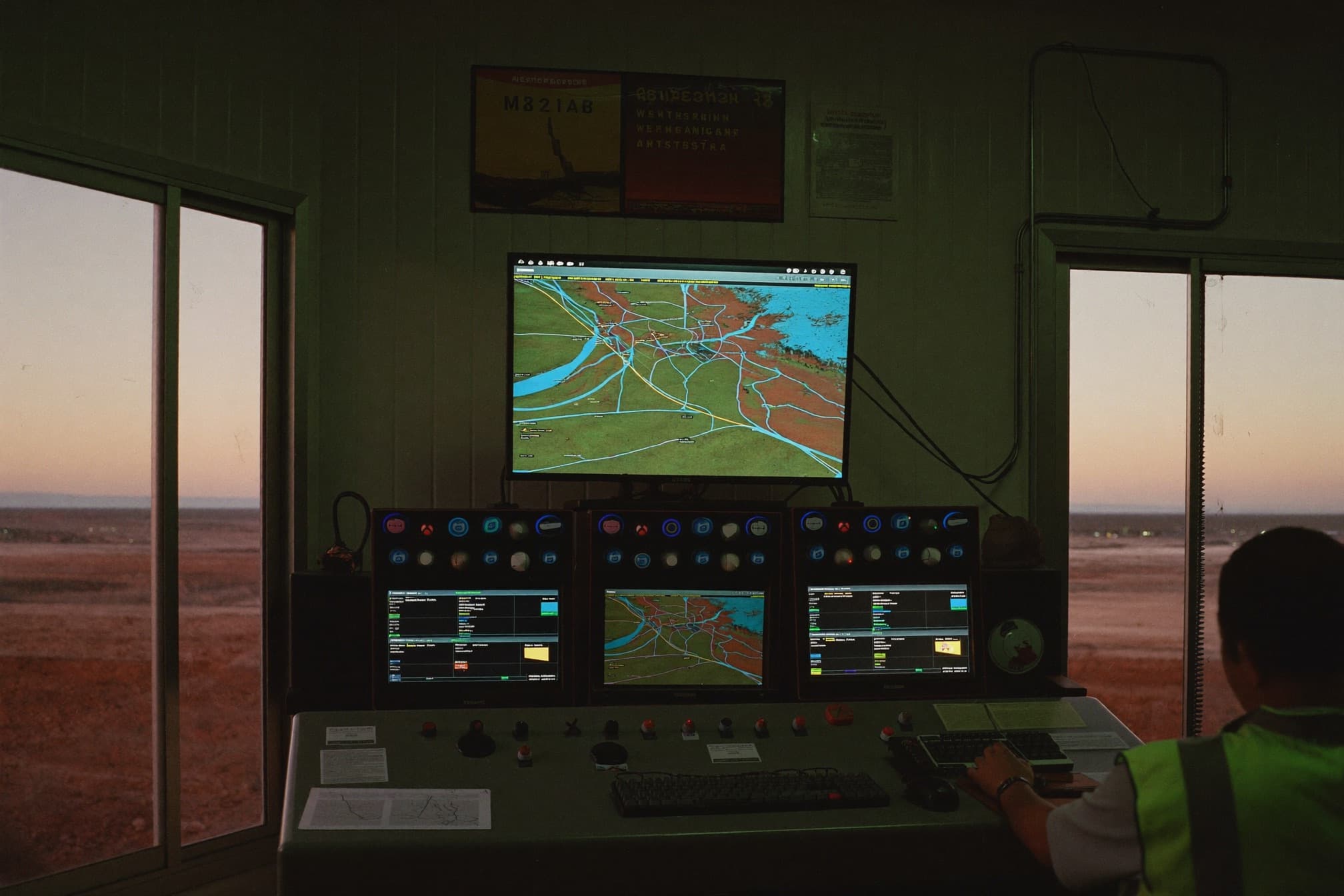
Perth’s mining sector runs on an operational model built by the majors. BHP, Rio Tinto, Fortescue. And scaled down unevenly to mid-tier and junior producers. Where the majors have enterprise architectures with SAP, historians, plant automation, and dedicated data teams, mid-tier operators often still run finance in Pronto or MYOB, maintain assets in a separate system, reconcile production data from SCADA to Excel, and assemble WA DMP returns in weeks of manual effort every year. The gap between what’s possible and what mid-tier operators actually have is wider than most realise. And it’s a real cost-per-tonne difference when commodity prices turn.
This article covers what successful business-systems modernisation looks like for Perth mining operators, what the major pitfalls are, and how to structure a program that doesn’t break the mine while improving it.
What Modernisation Actually Means
Modernisation in this context isn’t about buying new software. It’s about moving from a reporting cadence that lives in month-end reconciliation to an operational cadence that matches the mine’s actual production rhythm. Four specific shifts matter:
- Production cost becomes a live metric. SCADA and plant data feed the ERP so cost per tonne, cost per hour, and cost per shift are available when decisions are being made. Not three weeks after month-end.
- Asset lifecycle unifies across ERP and maintenance. Equipment, maintenance, and financial data share a single source of truth. Overhaul decisions, replacement planning, and closure provisioning all work from the same numbers.
- Compliance becomes a byproduct. WA DMP annual returns, DWER environmental reports, and rehabilitation data assemble from source systems rather than being reconstructed each year.
- Workforce and rostering integrate end-to-end. FIFO rostering, fatigue management, time worked, travel, and accommodation flow through the same system that handles payroll and workforce analytics.
The Production Costing Shift
This is the most visible change for most operators. The legacy approach is: SCADA produces tonnes moved; the weighbridge records loads to the port; the payroll system records hours; finance reconciles all of this at month-end and produces a cost-per-tonne number five or six weeks after the actual production happened. Good for historical reporting. Useless for day-to-day decisions about grade, tonnage, or schedule.
The modern approach integrates the data sources. SCADA tags drive production bookings into the ERP in real time. Consumables usage (explosives, fuel, tyres, liner sets) posts against production as it’s consumed rather than at month-end. Maintenance hours post against specific equipment. Labour allocation by area and activity flows through to production costs. The outcome: a cost-per-tonne dashboard that’s current within hours rather than weeks.
The technical work involves SCADA/OPC integration, ERP configuration around production-based costing, and typically Power BI or equivalent for the operational dashboards. Platforms with strong built-in plant maintenance capability. SAP S/4HANA Plant Maintenance, Oracle Cloud EAM, IFS, Pronto. Have a head start; Business Central and Dynamics 365 get there through configuration and extension.
The Asset Lifecycle Shift
Mining assets live for decades. A haul truck goes through multiple engine overhauls, tyre cycles, tray replacements, and upgrade programs across its operational life. A processing plant evolves through expansions, debottlenecking projects, and compliance upgrades. A mine progresses from development through peak production to late life, remediation, and closure. When asset data lives in different systems for operations, maintenance, and finance, decisions about overhaul versus replacement, end-of-life provisioning, and closure planning happen on incomplete data.
Unifying asset lifecycle means the ERP holds the financial view of each asset (acquisition cost, depreciation, impairment, closure provision) while maintenance management holds the operational view (hours, condition, maintenance history, defects). Integration keeps both current. Decisions about operational life, overhaul ROI, and closure timing happen on the same numbers.
Mine closure provisioning deserves special mention. WA DMP expects closure liabilities to be provisioned against mining assets, and good practice is to update provisions as operating plans and closure cost estimates change. When closure data lives in a spreadsheet maintained by the environment team and closure provisioning lives in the ERP’s journals, the two drift apart quickly. Integration keeps them aligned.
Need help with mining ERP modernisation? Talk to our team.
We’ll review your current setup and give you honest recommendations : whether you work with us or not.
Book a free reviewAutomating DMP and DWER Reporting
WA Department of Mines, Industry Regulation and Safety (DMP) annual returns are the single largest compliance exercise for most mid-tier operators. The return demands production data, environmental monitoring data, safety incidents, rehabilitation progress, closure estimates, and financial metrics. Most operators assemble this by hand over three to six weeks each year, pulling data from SCADA, environmental monitoring platforms, safety systems, maintenance records, and finance.
The modernised approach inverts the problem. Data flows continuously from source systems into a structured reporting data model that follows the DMP return structure. Environmental threshold breaches trigger DWER notification workflows automatically. Safety incidents feed Serious Accident notification processes. Rehabilitation progress tracks against mine closure plans. By the time the return is due, most of the data is already in the right shape; the team reviews and validates rather than assembling from scratch.
The same pattern applies to DWER environmental reporting. Water quality, air quality, noise, dust, and greenhouse gas monitoring all feed into structured reporting with threshold-based alerting and automated notification workflows. Operators running this discipline well see the regulator relationship improve; problems get flagged proactively rather than surfacing at annual review.
Workforce and FIFO Integration
FIFO workforce management is where many Perth operators feel daily pain. Rostering happens in a specialist system. Fatigue management rules apply. Travel is booked through flights and bus bookings. Accommodation is allocated at camp. Time worked is recorded on site. Pay runs reconcile all of this. When these systems don’t talk to each other, pay variances become month-long investigations, roster changes trigger manual downstream chaos, and workforce analytics lag reality.
Modernisation connects rostering to flight and bus scheduling to camp accommodation to on-site time capture to payroll. Roster changes trigger automatic downstream updates. Pay runs reconcile cleanly. Workforce analytics show FIFO productivity, swing performance, and fatigue trends on current data. For offshore operators, the same patterns apply with boat and helicopter scheduling, muster management, and emergency response workflows.
Pitfalls to Avoid
Mining business-systems programs fail in recognisable ways. The big-bang ERP replacement that tries to migrate finance, maintenance, SCADA integration, and rostering simultaneously usually takes three times as long and twice the budget. The SCADA-to-ERP integration done by the finance consultant without plant engineering involvement produces data that doesn’t reflect how the plant actually operates. The asset master data load that doesn’t match physical reality on site causes month-end reconciliation nightmares that last years.
The successful programs take a different shape. They start with the highest-value, most tractable problem. Usually production costing or DMP reporting. And deliver measurable value in weeks rather than years. They involve plant engineering alongside IT and finance. They test data models against real production scenarios before cutover. They run legacy and new systems in parallel for long enough to catch the edge cases. They train operational users, not just finance.
Getting Started
For mid-tier Perth operators looking at modernisation, the right starting question isn’t “which ERP?” It’s “what’s the most painful operational gap we can close in 90 days?” Often the answer is production cost visibility, or DMP automation, or integrated asset lifecycle. Whatever it is, demonstrate value there, build organisational confidence and data-model discipline, and expand from that foundation.
The majors built their enterprise architectures over decades. Mid-tier operators don’t need to replicate that in year one. They need to close the most expensive gaps first and build from there. The platforms, integration patterns, and data-model discipline are well-understood. The organisational change is the hard part, and that’s where successful programs invest heavily.
Ready to get started?
Book a free systems review. We’ll map the gap and send you a clear action plan.
Book my free systems reviewReady to modernise your Perth mining systems?
AMBR IT has delivered 500+ business systems projects with zero data loss. We build for low-bandwidth, high-reliability, remote-first environments. Exactly the WA mining reality.